Cinderella: the full story to read and download as a PDF
The kind young woman who lived among the cinders gets help from a fairy godmother to go to the prince’s ball, but she must be home before midnight. Here is the whole story, retold for young children and illustrated by Heroica, to read on screen or download as a PDF.
Download the free PDFIllustrated 9-page PDF to read on a phone, print out or use in class.
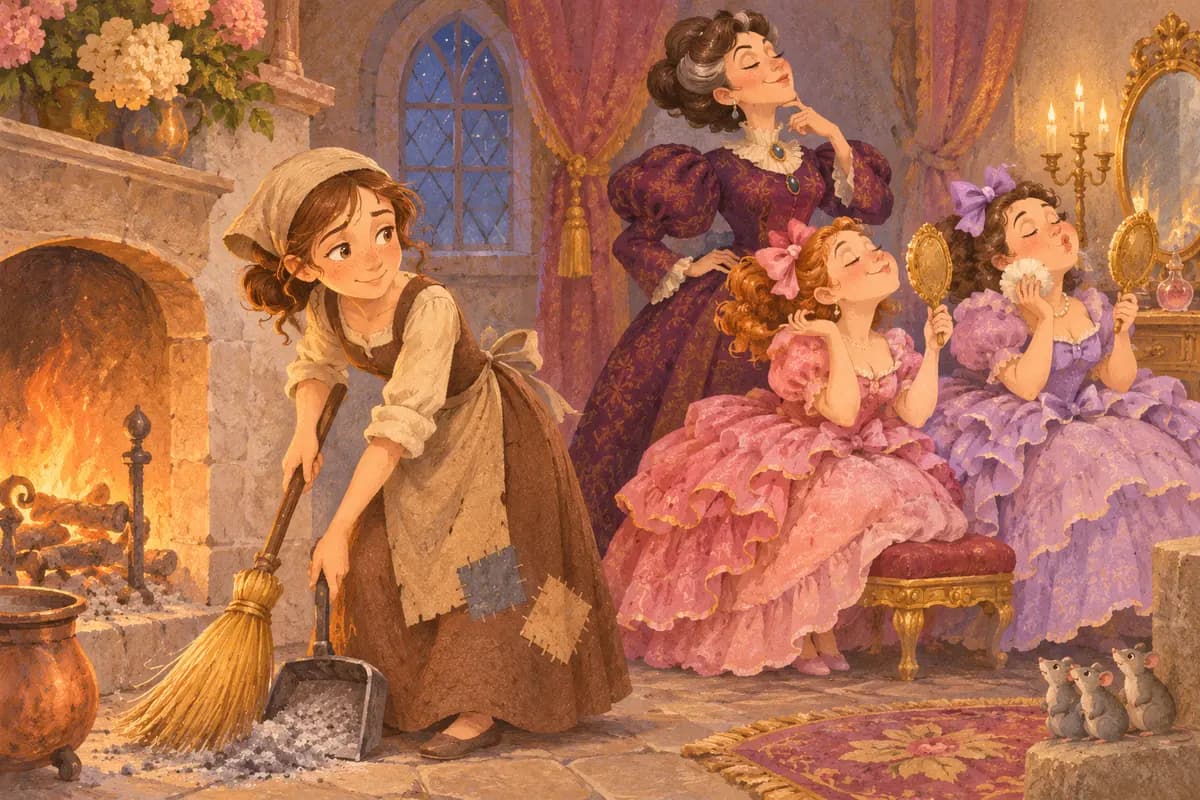
Once upon a time there was a very kind young woman who lived with her stepmother and her stepmother’s two daughters. All three were bossy and vain, and they left her all the housework: sweeping, washing, cooking and lighting the stove.
At night, tired out, she sat by the fireplace among the cinders to keep warm. So her stepsisters called her Cinderella. Her only friends were the little mice who lived in a corner of the kitchen.
One day an invitation arrived from the palace: the prince was giving a grand ball. The stepsisters spent days trying on dresses and hairstyles, and Cinderella helped them get ready. "You, at the ball? What an idea!" they laughed, and off they went in their carriage.
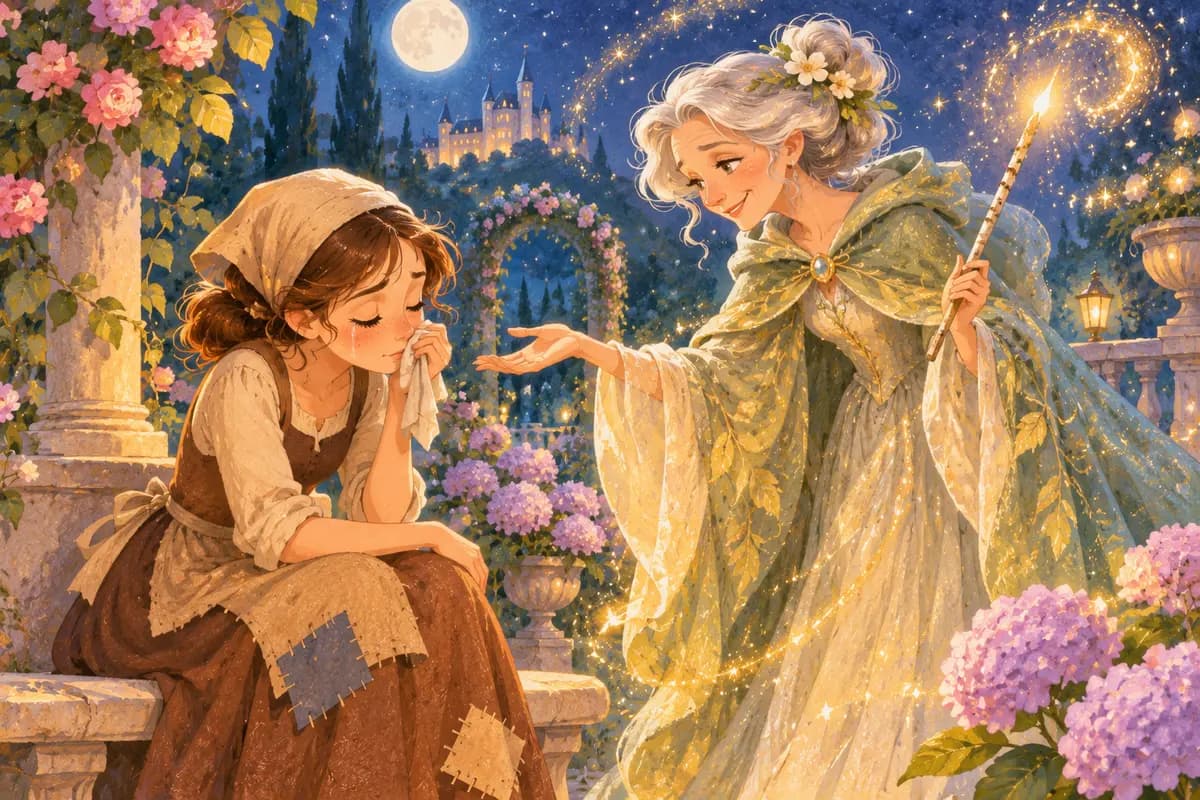
Alone in the garden, Cinderella began to cry. Suddenly, in a shower of sparkles, a tall lady with silver hair and a wand in her hand appeared. "I am your fairy godmother. You shall go to the ball too!"
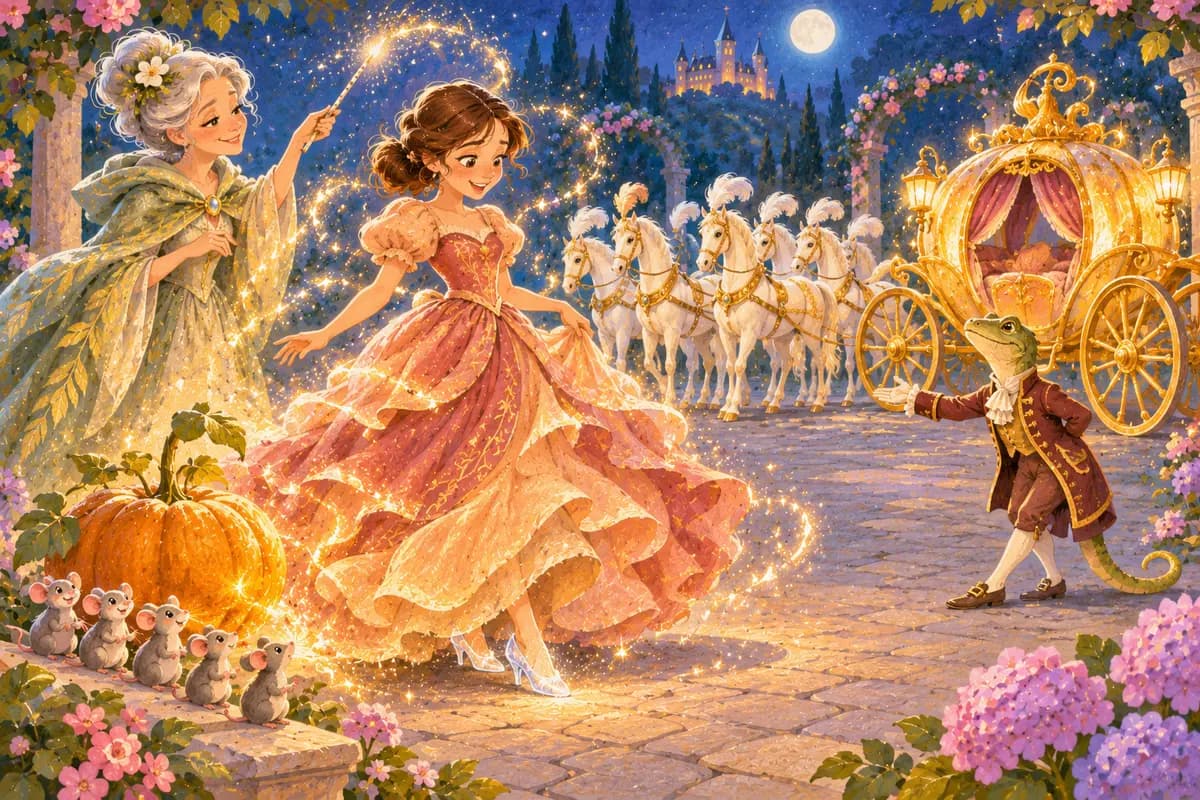
"Bring me a pumpkin," said the fairy. With a tap of her wand, the pumpkin became a golden carriage. Six little mice became white horses, a rat became a coachman and a lizard became a footman.
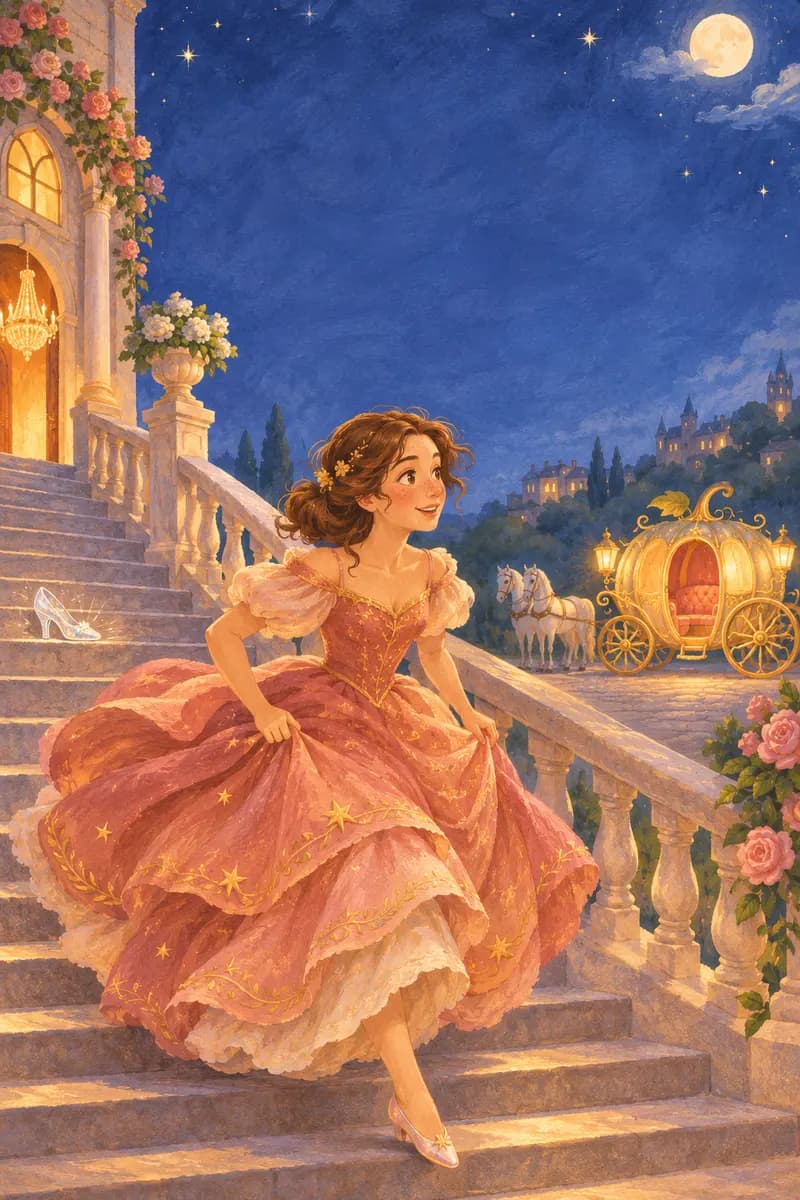
Then the fairy touched Cinderella’s patched dress, and it turned into a peach-coloured gown embroidered with tiny stars, with a pair of glass slippers. "Have fun, but come back before midnight. On the last stroke, the magic ends!"
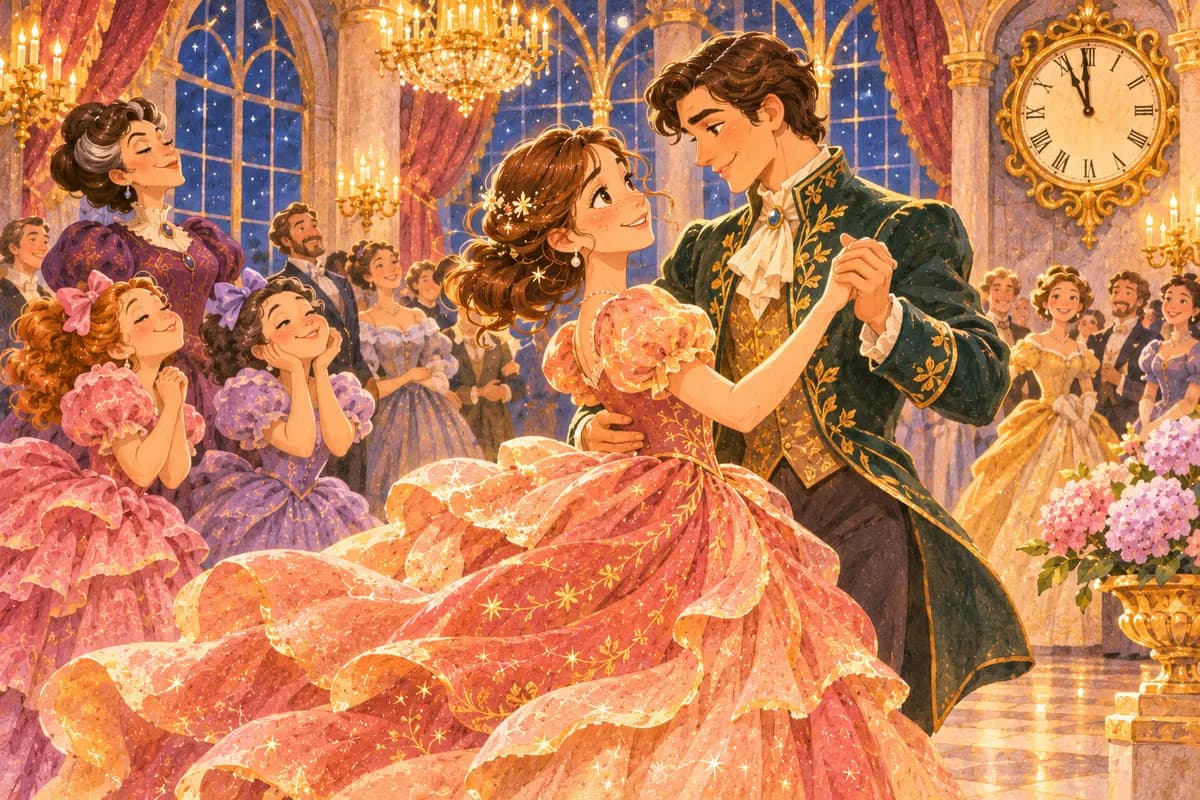
When Cinderella walked into the ballroom, everyone stopped to look. No one, not even her stepsisters, recognised the girl from the kitchen. The prince asked her to dance and would not dance with anyone else all night.
They talked, laughed and danced so much that Cinderella didn’t notice the time passing. Then she looked up at the great clock in the ballroom: it was one minute to midnight!
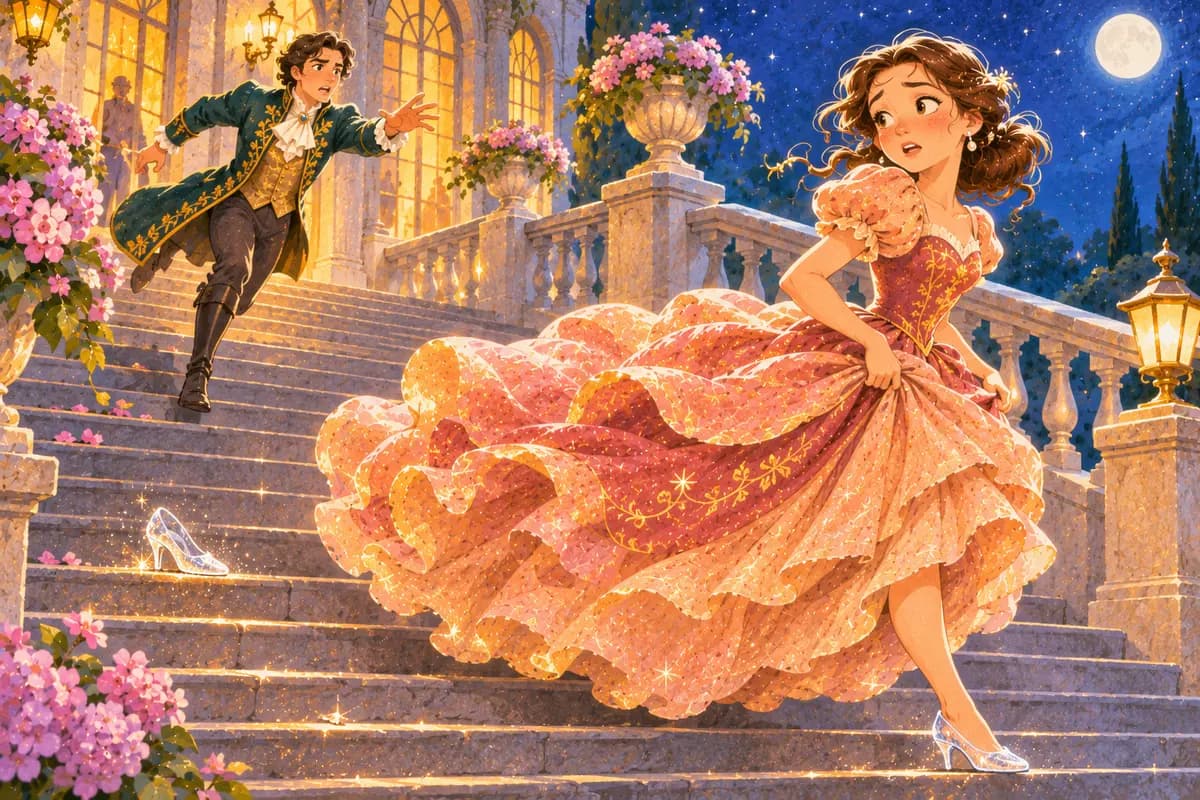
Bong! The clock began to strike. Cinderella ran down the stairs so fast that she lost one of her glass slippers on a step. The prince ran after her, but all he found was the slipper.
On the road, at the last stroke, the carriage turned back into a pumpkin, the horses turned back into mice and the gown turned back into the patched dress. All Cinderella had left was the other glass slipper.
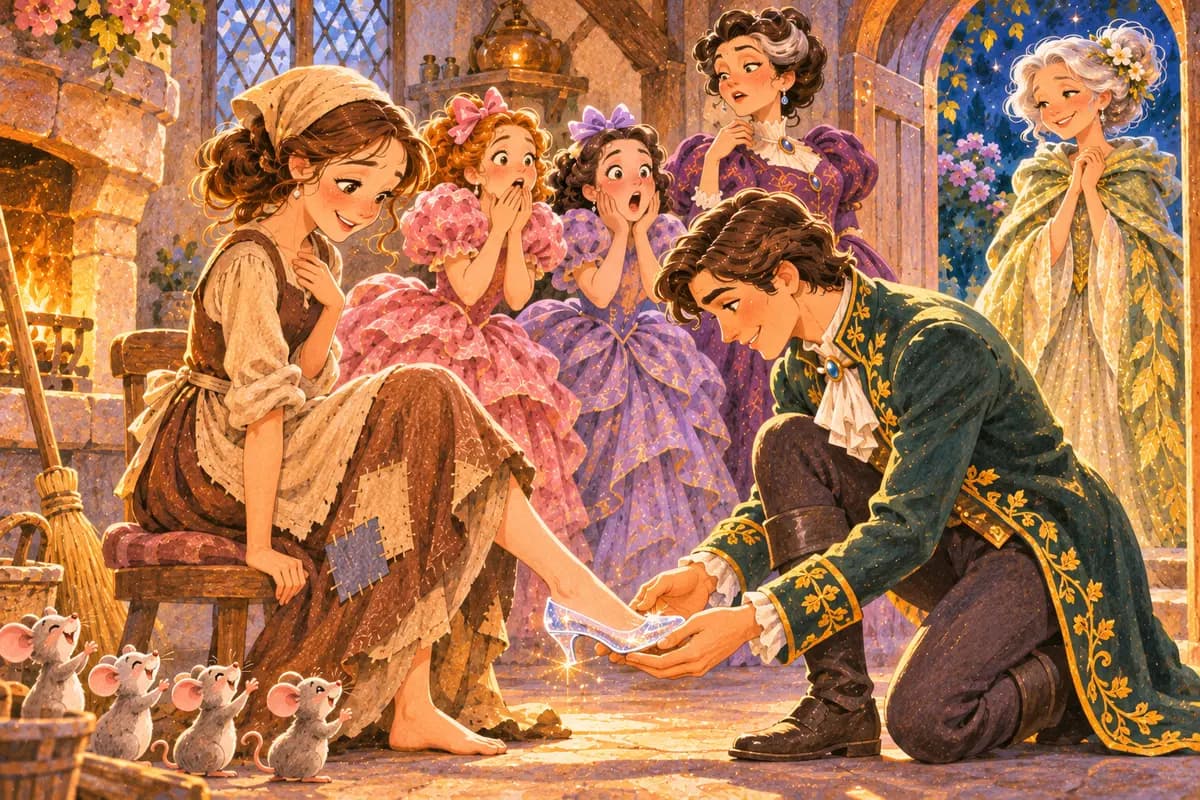
The prince announced that he would marry the young woman whose foot fitted the slipper. His messengers went from house to house. The stepsisters pushed and squeezed, but their feet would not go in at all.
"May I try?" asked Cinderella. The slipper fitted perfectly, and she took the other one out of her pocket. The prince knew her at once. They were married, and Cinderella, with her kind heart, forgave her stepsisters and invited them to the party. The end.
Retelling and illustrations: Heroica Books
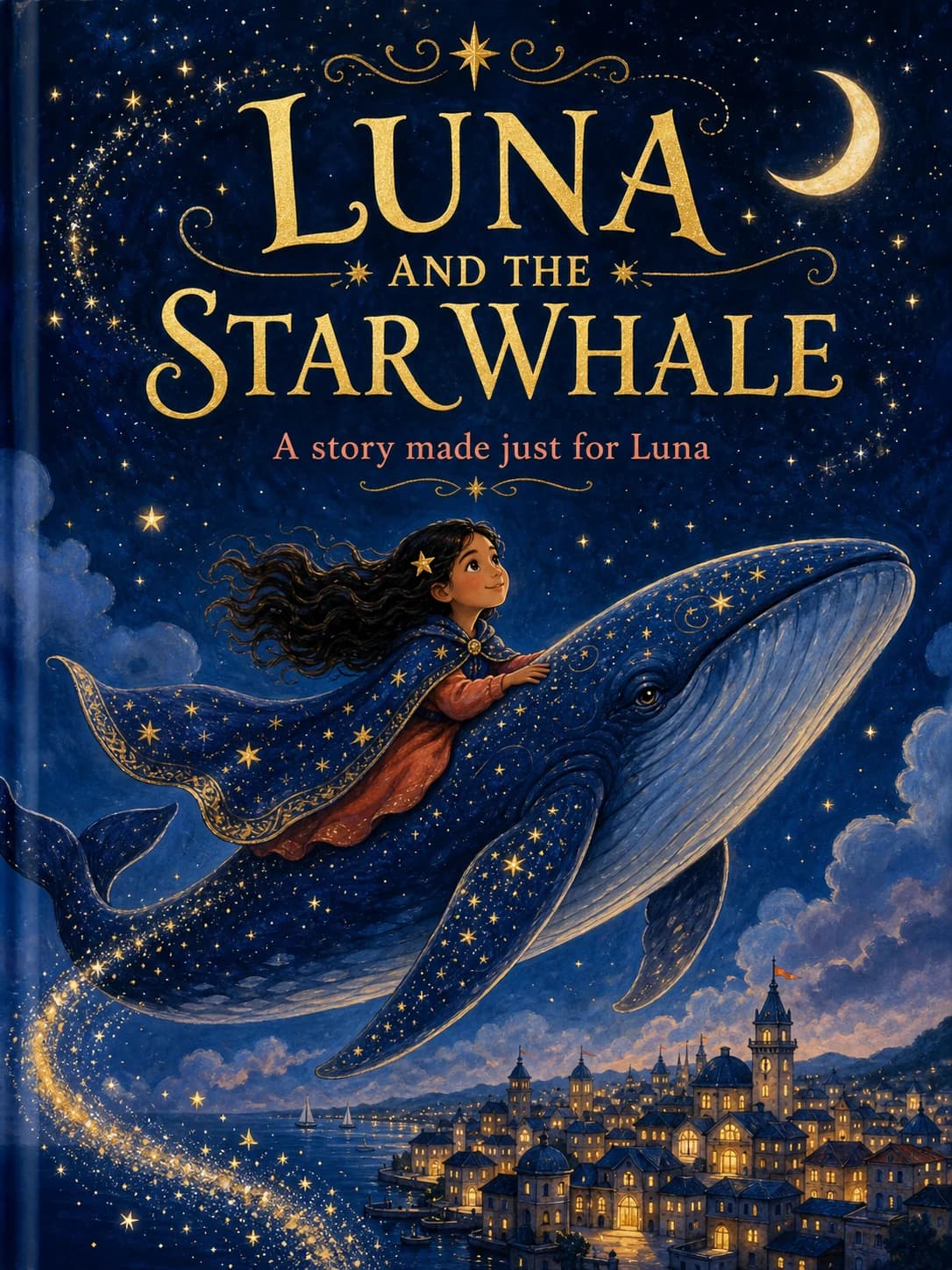
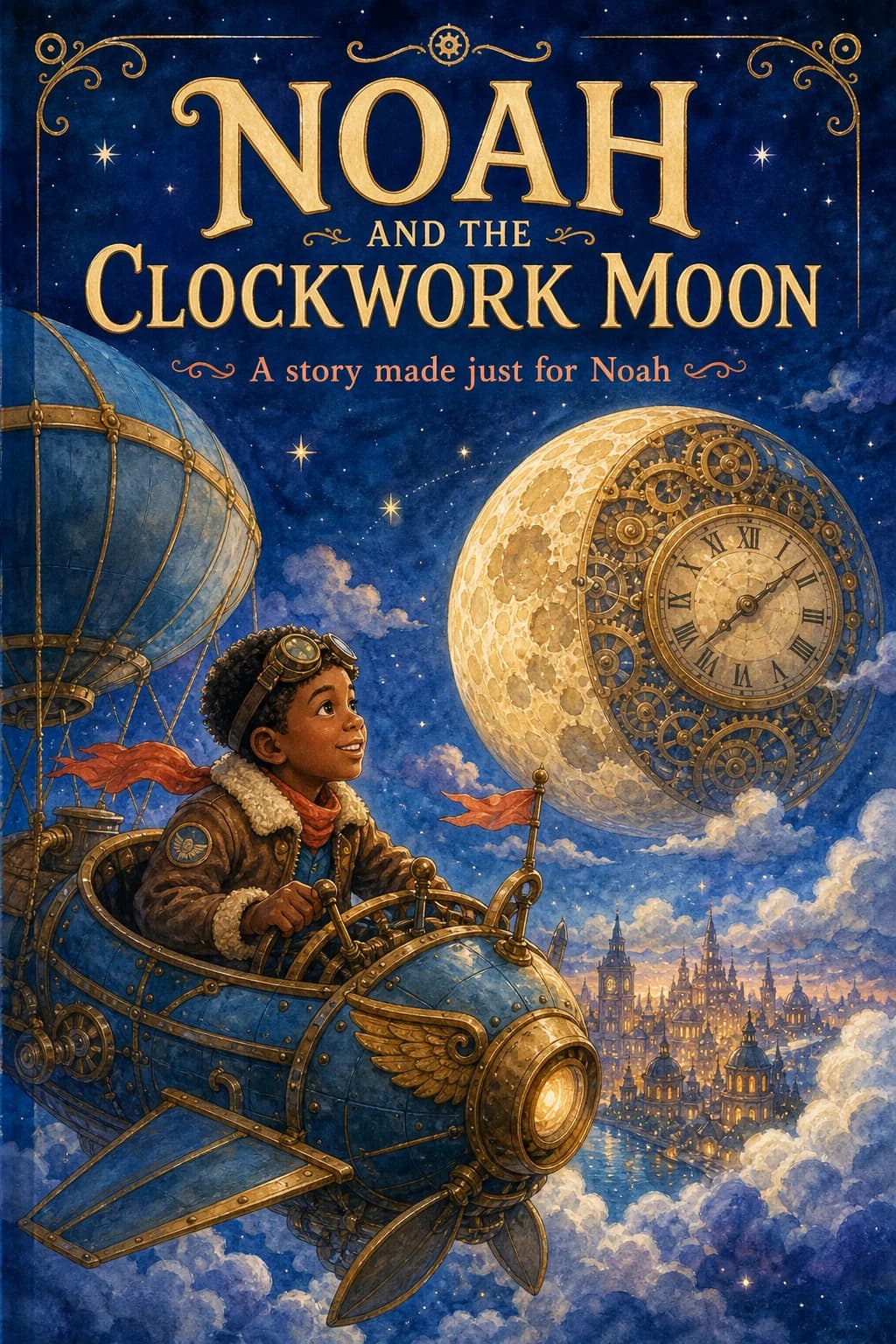
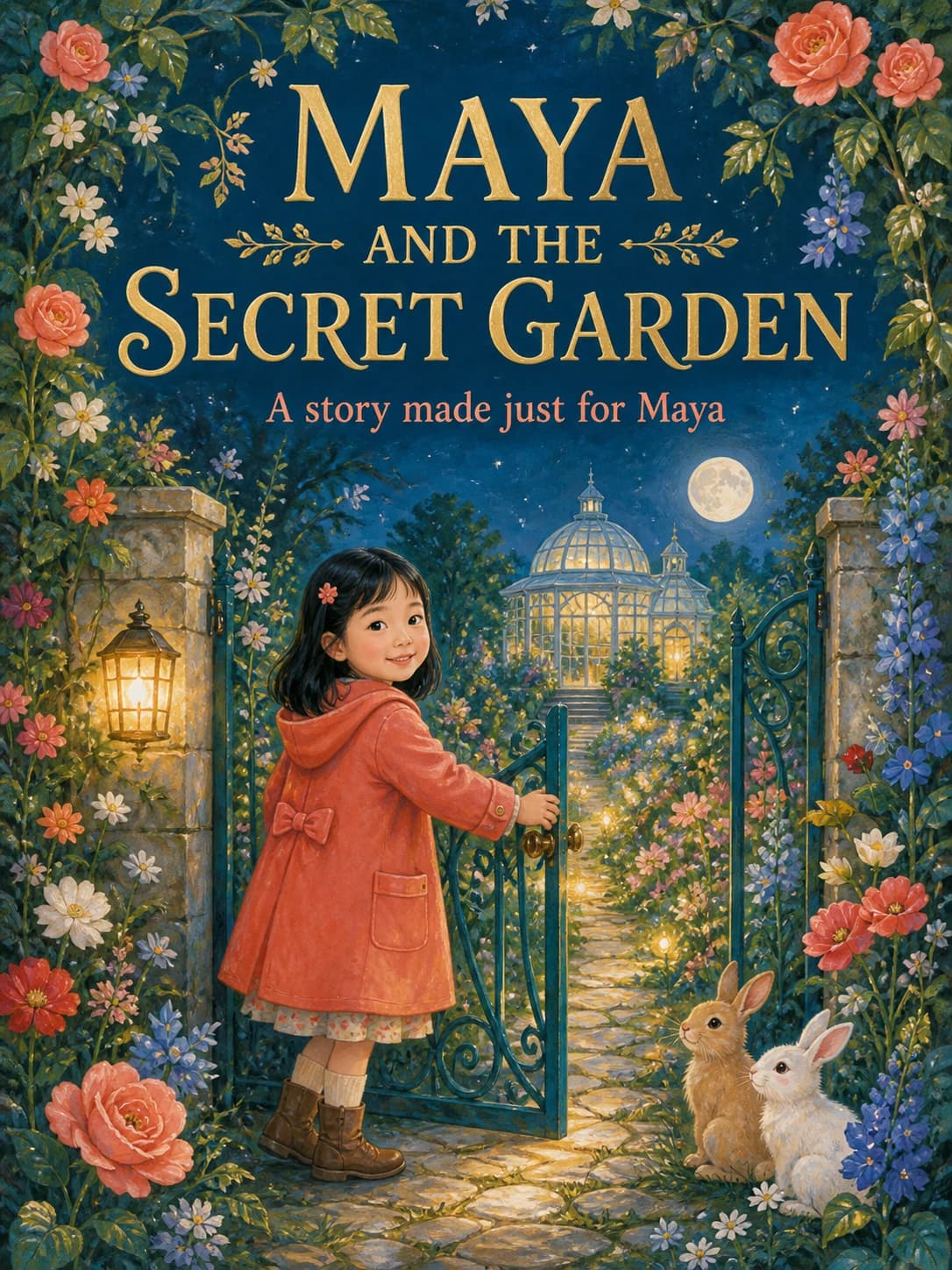
What if the hero of the next story were your child?
With Heroica you create a book with a brand-new story, written for your child and illustrated with their face from a photo.
- A story written for your child's age, from 2 to 12
- Illustrations with your child's face, from a photo
- Free preview with the cover and the text of the first page
What is the moral of the story?
Goodness and kindness shine through even the plainest clothes, and forgiving others is the mark of a big heart.
Where does this story come from?
Charles Perrault published "Cinderella, or the Little Glass Slipper" in France in 1697, and the Brothers Grimm recorded another version, "Aschenputtel", in 1812. This retelling follows Perrault, with the fairy godmother, the pumpkin and the glass slipper, and the ending in which Cinderella forgives her stepsisters.
Frequently asked questions
Who wrote Cinderella?
It is a folk tale told in many countries. The best-known version is by Charles Perrault, from 1697 ("Cendrillon"). The Brothers Grimm published another version in 1812 ("Aschenputtel").
What is the moral of Cinderella?
Kindness matters more than appearance, patience is rewarded, and forgiving people who treated us badly shows a generous heart.
Can I print the PDF and use it at school?
Yes. The PDF is free to read, print and share at home, at school or in the library, for non-commercial use. The retold text and the illustrations belong to Heroica Books.
Is there a version where my child is the main character?
This tale is the same for everyone. With Heroica you create a book with a new story in which your child is the hero, with illustrations made from a photo. The preview with the cover and the text of the first page is free.