Puss in Boots: the full story to read and download as a PDF
A poor young man inherits nothing but a cat, but the cat asks for a pair of boots and, with great cleverness, changes his master’s luck. Here is the whole story, retold for young children and illustrated by Heroica, to read on screen or download as a PDF.
Download the free PDFIllustrated 9-page PDF to read on a phone, print out or use in class.
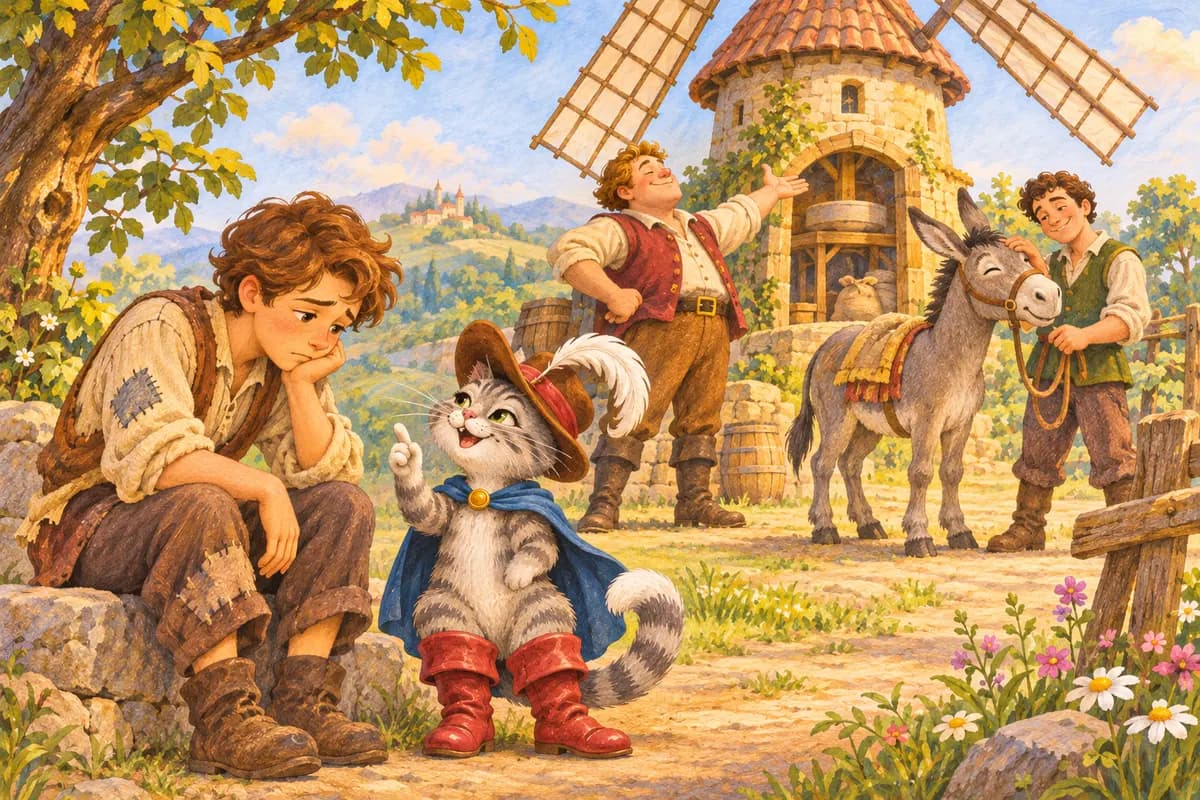
Once upon a time a miller left everything he owned to his three sons: the mill went to the eldest, the donkey to the middle one, and the youngest got only a cat. "What am I going to do with a cat?" sighed the young man.
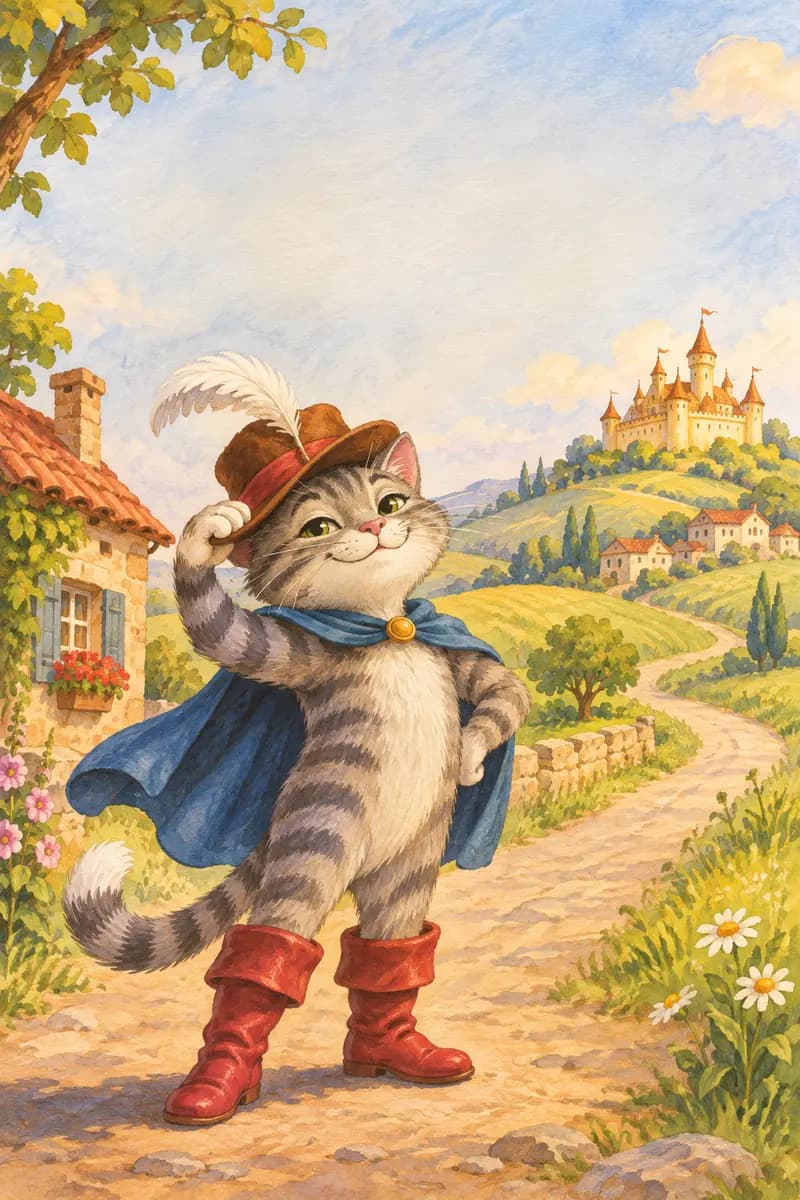
The cat, who was very clever, answered: "Don’t be sad, master. Give me a sack and a pair of boots for walking in the woods, and you’ll see you haven’t done so badly." Curious, the young man spent his last coins on a pair of red boots.
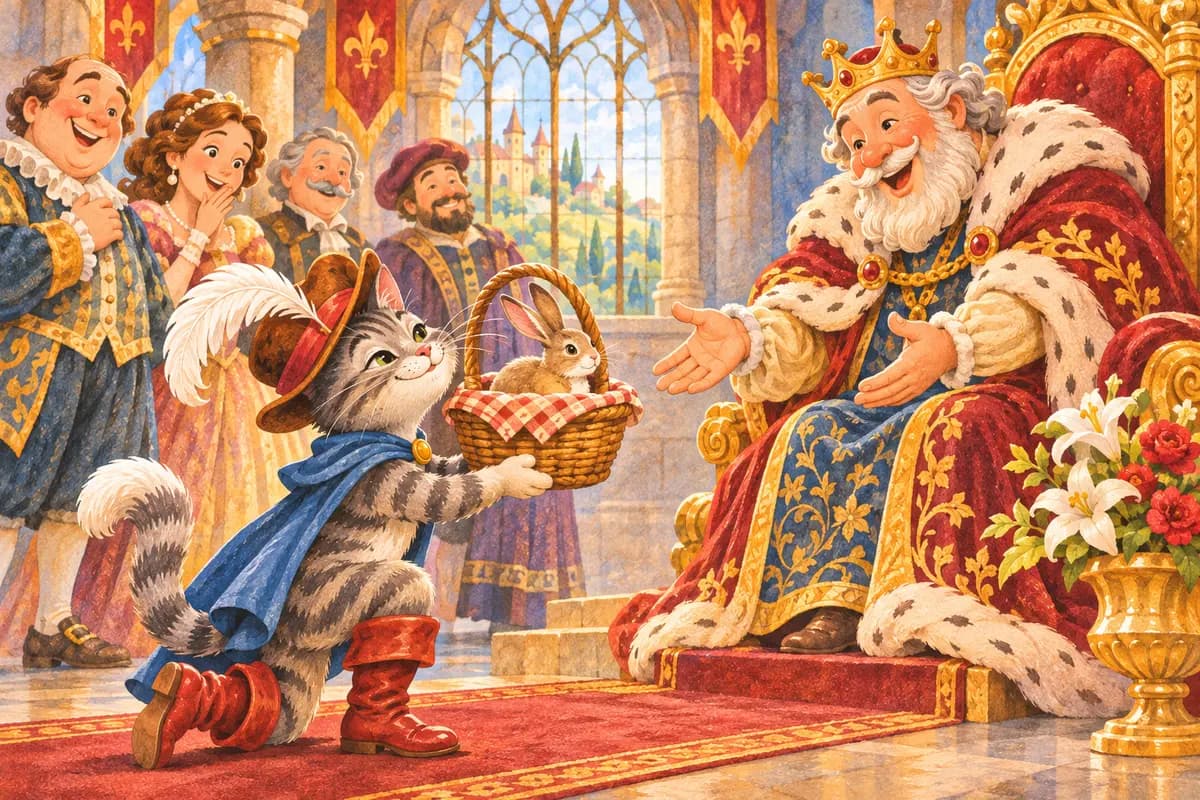
In his boots, cape and feathered hat, the cat went into the woods and caught a rabbit. Then he went straight to the palace and bowed to the king: "Your Majesty, I bring this gift from my master, the Marquis of Carabas." It was the name he had made up for his master.
The king was delighted. And for months the cat brought rabbits, partridges and other gifts to the palace, always in the name of the Marquis of Carabas. The king grew very curious to meet such a generous marquis.
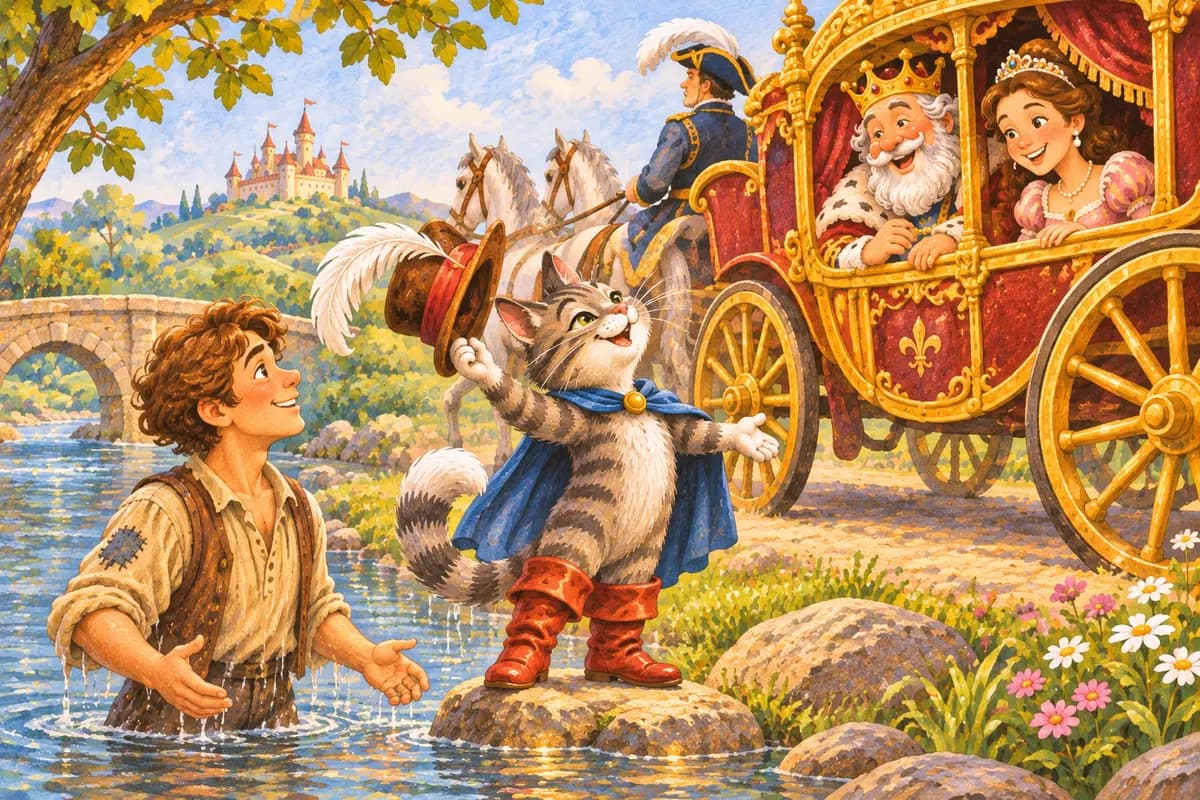
One day, the cat heard that the king was going for a carriage ride along the river with his daughter, the princess. "Go into the river and have a bath, master, and leave the rest to me," he said. The young man did as he was told, without understanding a thing.
When the carriage came by, the cat shouted: "Help! Help! The Marquis of Carabas is drowning, and someone has stolen his clothes!" The king sent for a fine suit, and the young man looked so handsome in it that the princess smiled at him.
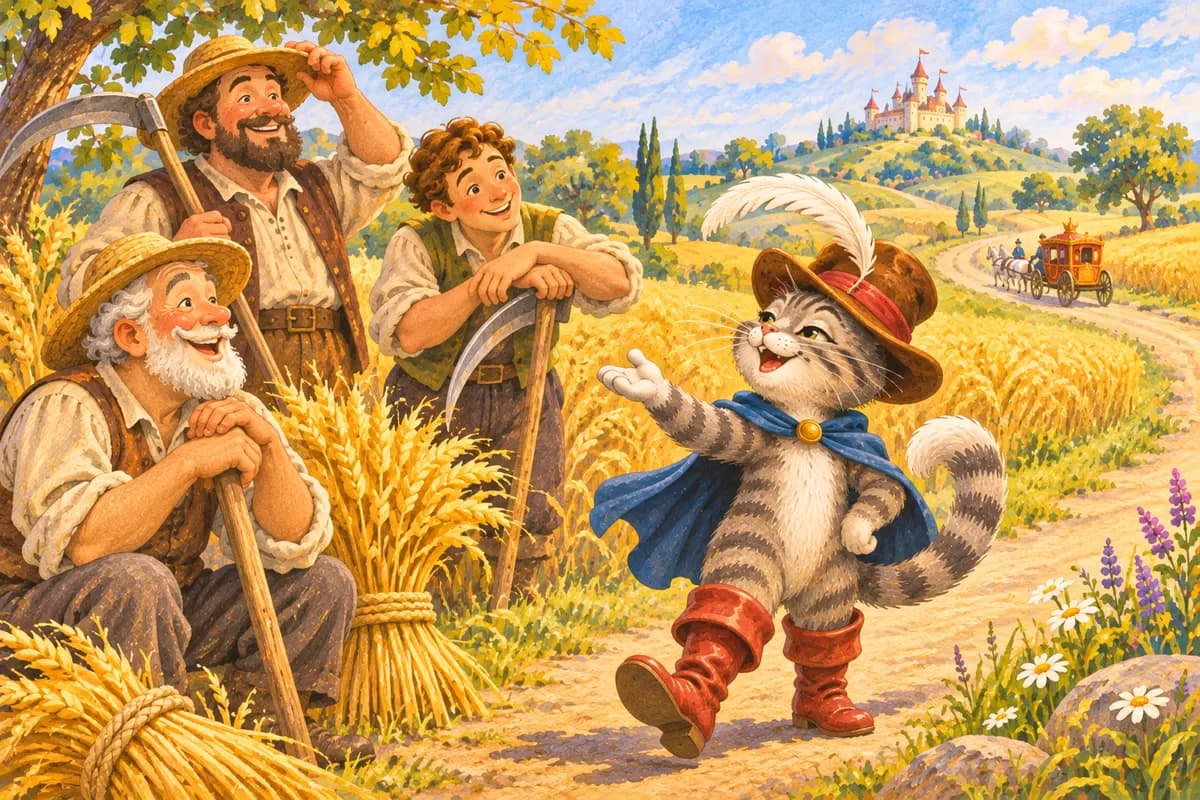
The king invited the young man to ride on in the carriage. Meanwhile, the cat ran on ahead. In the wheat fields he met the farmers and said: "When the king comes by and asks whose land this is, tell him it belongs to the Marquis of Carabas!"
And that is just what happened. At every field the king asked, and the farmers answered: "The Marquis of Carabas!" The king was more and more impressed.
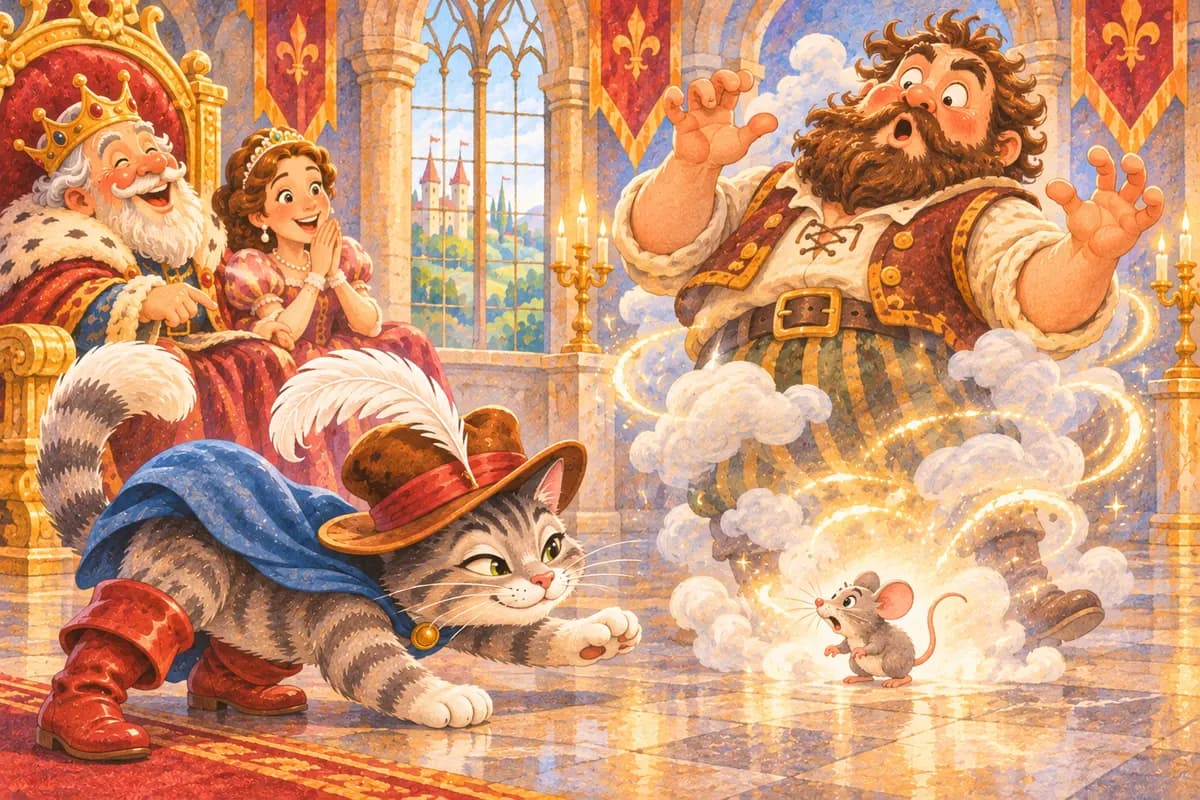
The land really belonged to an ogre who lived in an enormous castle and could turn himself into any animal. The cat knocked on the door and said: "I’ve heard you can even turn into a lion. I don’t believe it!" The ogre, showing off, turned into a lion, and the cat leapt onto the roof in fright.
"Amazing! But I bet you can’t turn into something tiny, like a mouse." "Of course I can!" said the ogre, and he turned into a mouse. The cat pounced, and the mouse ran off through a hole so frightened that it never came back.
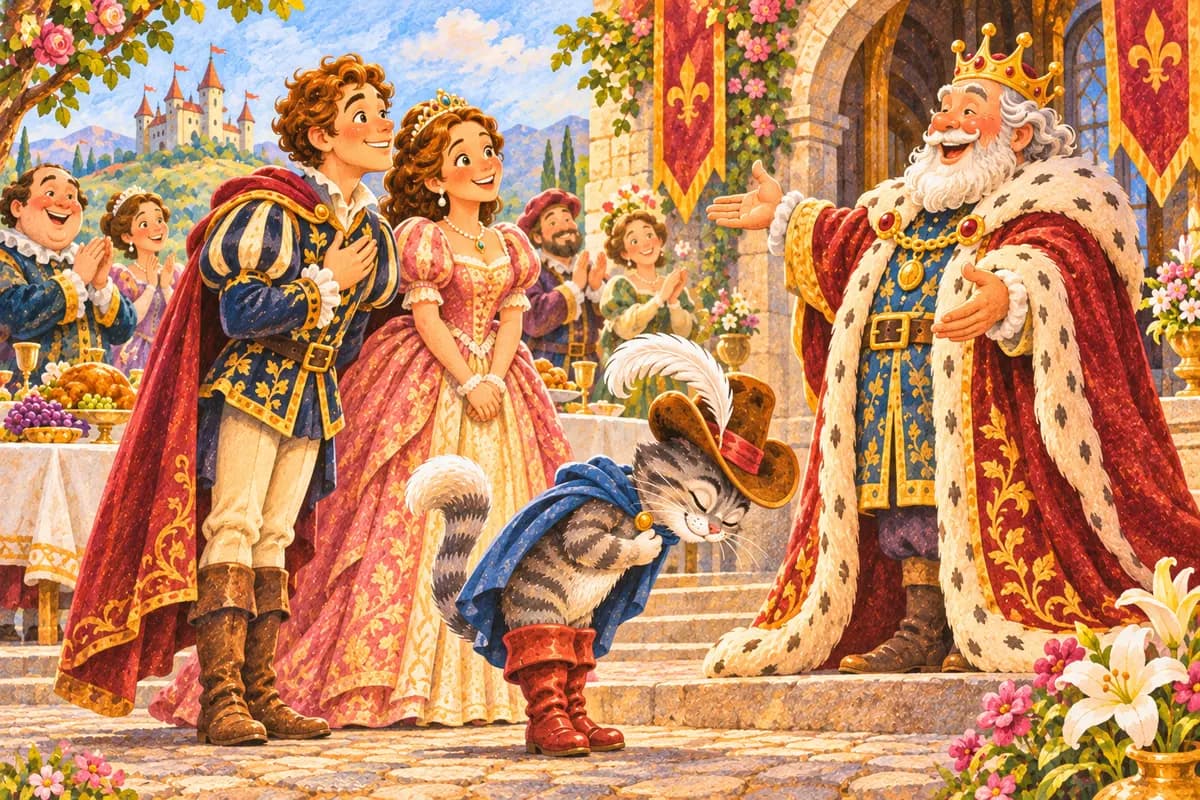
Soon afterwards, the king’s carriage arrived at the castle. The cat threw open the gates and gave a deep bow: "Welcome to the castle of the Marquis of Carabas!" Inside, the table was already set for a feast.
The king was so charmed that he invited the young man to marry the princess, who already liked him very much. The two were married, and the cat became a great lord who only chased mice for fun. The end.
Retelling and illustrations: Heroica Books
What if the hero of the next story were your child?
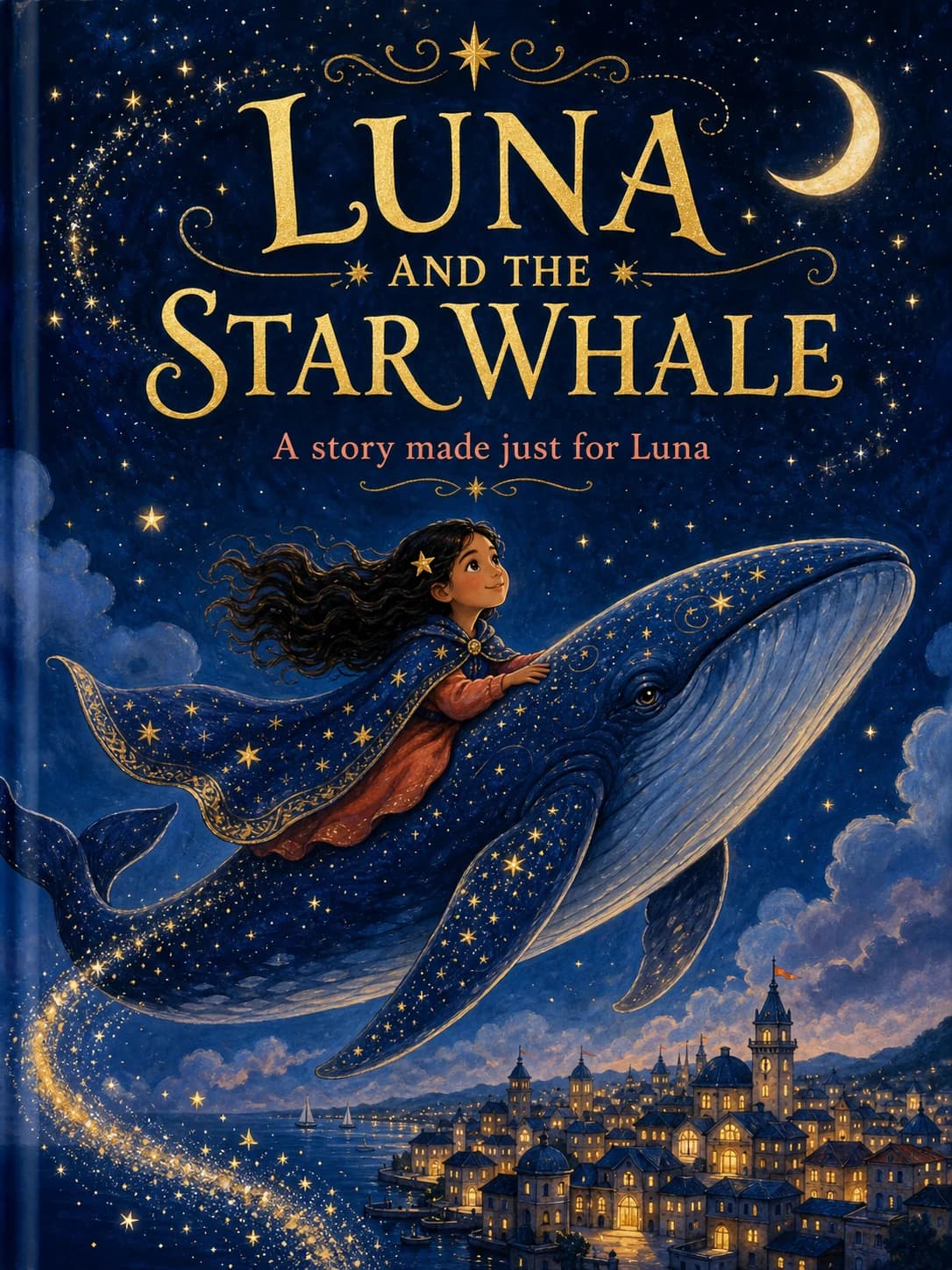
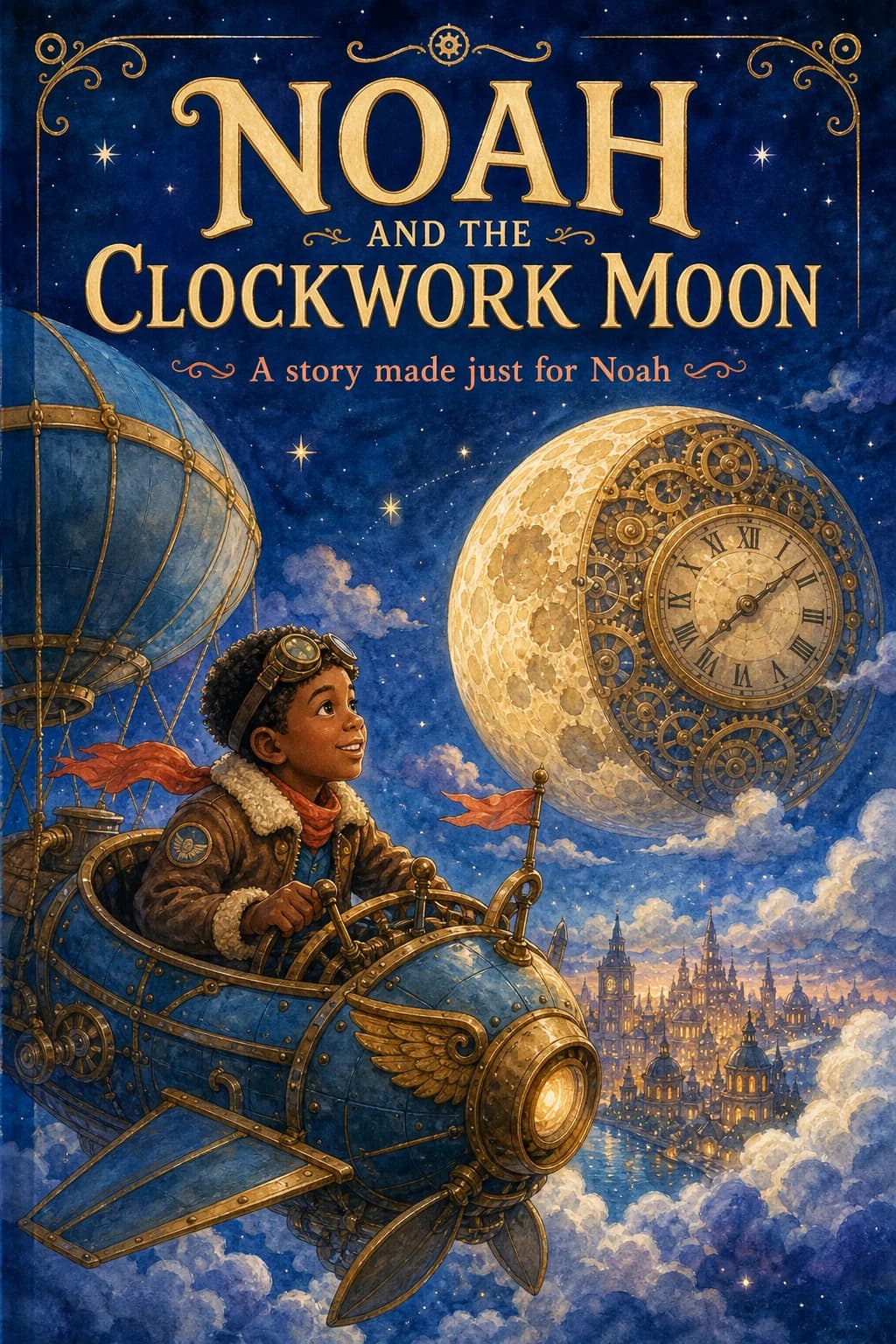
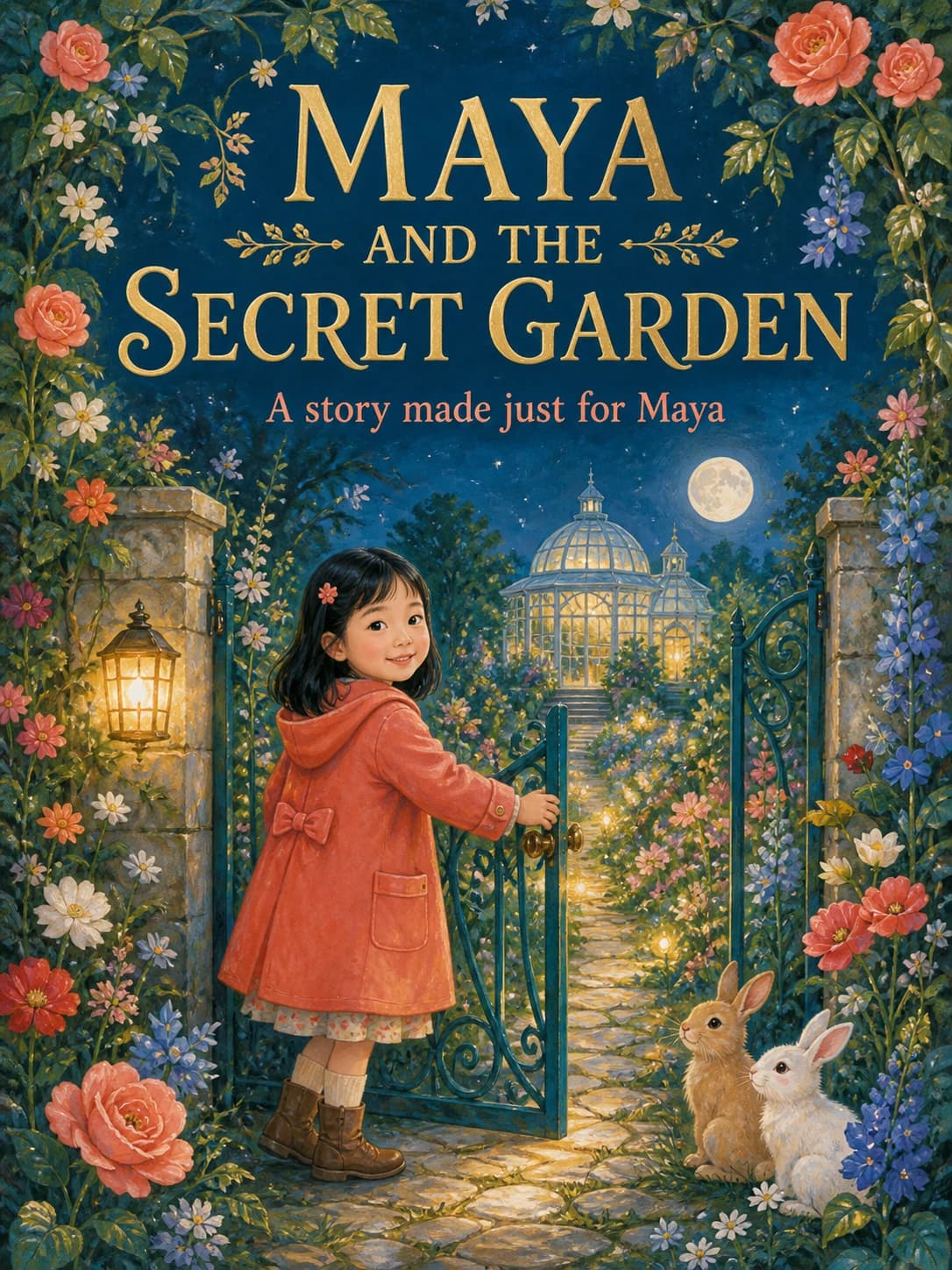
With Heroica you create a book with a brand-new story, written for your child and illustrated with their face from a photo.
- A story written for your child's age, from 2 to 12
- Illustrations with your child's face, from a photo
- Free preview with the cover and the text of the first page
What is the moral of the story?
Cleverness, courage and imagination can be worth more than a big inheritance. But in real life, it is the truth that earns people’s trust.
Where does this story come from?
Charles Perrault published "The Master Cat, or Puss in Boots" in France in 1697, based on a story told earlier in Italy by Giovanni Francesco Straparola and Giambattista Basile. In this retelling for young children, the ogre turns into a mouse and runs away through a hole instead of being eaten by the cat.
Frequently asked questions
Who wrote Puss in Boots?
The best-known version is by Charles Perrault, from 1697 ("Le Maître Chat ou le Chat botté"). Similar stories had already been told in Italy, by Straparola around 1550 and by Basile in 1634.
Doesn’t Puss in Boots trick the king?
He does, and it makes for a good conversation with children. The tale celebrates the cat’s cleverness, but it is worth reminding them that in real life lying makes people stop trusting us.
Can I print the PDF and use it at school?
Yes. The PDF is free to read, print and share at home, at school or in the library, for non-commercial use. The retold text and the illustrations belong to Heroica Books.
Is there a version where my child is the main character?
This tale is the same for everyone. With Heroica you create a book with a new story in which your child is the hero, with illustrations made from a photo. The preview with the cover and the text of the first page is free.